Examples
of Traditional Thrillers
-Little
Red Riding Hood (1697) Psycho-stalker story
It is a French fairy tale by Charles Perrault about a young girl and a Big Bad Wolf, the innocent girl is persuaded by a wolf to talk the long path to her Grandmother's house, and when she arrives he eats her (hides her). The wolf's manipulations and stalking are conventions of a psychological thriller. It is an example of an early psycho-stalker thriller. The story has been changed and adapted through time and interpreted differently to create further books and films.
It is a French fairy tale by Charles Perrault about a young girl and a Big Bad Wolf, the innocent girl is persuaded by a wolf to talk the long path to her Grandmother's house, and when she arrives he eats her (hides her). The wolf's manipulations and stalking are conventions of a psychological thriller. It is an example of an early psycho-stalker thriller. The story has been changed and adapted through time and interpreted differently to create further books and films.

-Epic of
Gilgamesh
An epic poem from Mesopotamia, and one of the longest surviving pieces of literature. The most complete surviving version is preserved on twelve clay tablets and is in the library collection of the 7th Century BCE.
The main story is about the relationship between king Gilgamesh who becomes distracted and disheartened by his rule, and a friend Enkidu who is half wild. They undertake dangerous quests together. It focuses a lot on Gilgamesh's suffering following the loss of Enkidu. It is one of the first literary works that focuses on immortality.
An epic poem from Mesopotamia, and one of the longest surviving pieces of literature. The most complete surviving version is preserved on twelve clay tablets and is in the library collection of the 7th Century BCE.
The main story is about the relationship between king Gilgamesh who becomes distracted and disheartened by his rule, and a friend Enkidu who is half wild. They undertake dangerous quests together. It focuses a lot on Gilgamesh's suffering following the loss of Enkidu. It is one of the first literary works that focuses on immortality.

-Homer’s
Odyssey
One of only two Ancient Greek poems written by Homer, a poet. It is the second oldest existant work of Western literature - the first being Iliad, which Odyssey followed - and is believed to have been composed towards the end of the 8th Century. It focusses on the hero Odysseus and his journey home after the fall of Troy. It takes him 10 years to reach Ithaca after the Trojan War. In this time, his death is assumed and his wife and son must deal with unruly suitors who fight for his wife's hand in marriage. The is a lot of disguise, betrayal, fighting and power in the story, and some of the key themes are linked with that of a modern day 'thriller'.
One of only two Ancient Greek poems written by Homer, a poet. It is the second oldest existant work of Western literature - the first being Iliad, which Odyssey followed - and is believed to have been composed towards the end of the 8th Century. It focusses on the hero Odysseus and his journey home after the fall of Troy. It takes him 10 years to reach Ithaca after the Trojan War. In this time, his death is assumed and his wife and son must deal with unruly suitors who fight for his wife's hand in marriage. The is a lot of disguise, betrayal, fighting and power in the story, and some of the key themes are linked with that of a modern day 'thriller'.

-Mahābhārata
It is one of the two major Sanskript epics of ancient India. It contains an epic narrative of the Kurukshetra War and the fates of the princes, and a lot of philosophical material. The oldest preserved parts of the text are thought to have been from around 800 BCE.
It is one of the two major Sanskript epics of ancient India. It contains an epic narrative of the Kurukshetra War and the fates of the princes, and a lot of philosophical material. The oldest preserved parts of the text are thought to have been from around 800 BCE.

All use
similar narrative techniques to modern thrillers
The Three Apples, a tale in the One Thousand and One
Nights is the earliest known murder mystery and suspense thriller with multiple
plot twists and detective fiction elements.
The Count of Monte Cristo (1844)
Revenge thriller
A novel by French author Alexandre Dumas, and focuses on a man who is wrongly imprisoned, escapes from jail, aquires a small fortune and begins to get revenge on those wo falsely imprisoned him. however, his plans have devestating consequences for the innocent as well as the guilty.
Revenge thriller
A novel by French author Alexandre Dumas, and focuses on a man who is wrongly imprisoned, escapes from jail, aquires a small fortune and begins to get revenge on those wo falsely imprisoned him. however, his plans have devestating consequences for the innocent as well as the guilty.

The Riddle of the Sands (1903)
The first modern thriller (according to author Ken Follett)
While on a sailing trip in the Baltic Sea, two young adventurers-turned-spies uncover a secret German plot to invade England. Written by Childers - who served in the Royal Navy during World War I - as a wake-up call to the British government to attend to its North Sea defenses, the novel achieves this and has been considered a classic of espionage literature ever since.
The first modern thriller (according to author Ken Follett)
While on a sailing trip in the Baltic Sea, two young adventurers-turned-spies uncover a secret German plot to invade England. Written by Childers - who served in the Royal Navy during World War I - as a wake-up call to the British government to attend to its North Sea defenses, the novel achieves this and has been considered a classic of espionage literature ever since.

The Thirty-Nine Steps (1915)
An early thriller adventure novel by John Buchan, later adapted by Hitchcock
An example of a 'man-on-the-run' thriller about a man who puts his country's interests before his own safety, which was a big hit for those in the WW1 trenches.
An early thriller adventure novel by John Buchan, later adapted by Hitchcock
An example of a 'man-on-the-run' thriller about a man who puts his country's interests before his own safety, which was a big hit for those in the WW1 trenches.

The Lodger (1926)
Hitchcock’s first thriller and his third silent film about the hunt for a Jack-The-Ripper type serial killer in London.

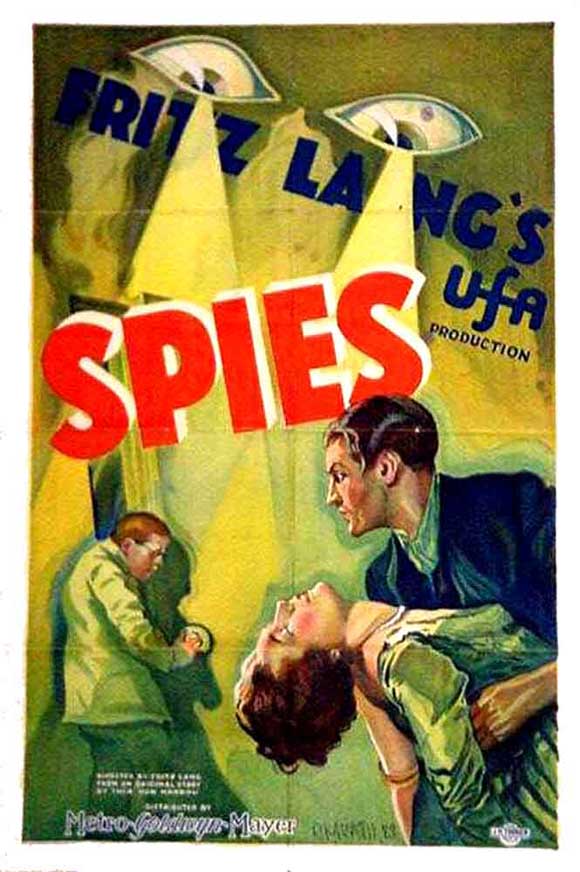
Fritz Lang’s Spies (1928) was one of the earliest spy
films
Hitchcock’s 2nd thriller was Blackmail (1929),
his and Britain’s first sound film.
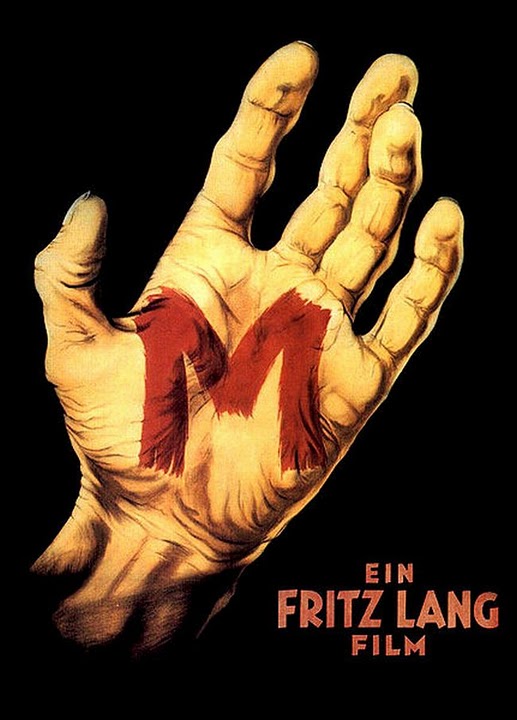
German film M (1931) based on life of serial killer Peter
Kurten
The Man Who Knew Too Much (1933) Hitchcock

In the 1950s, Hitchcock added Technicolor to his films,
The Manchurian Candidate (1959) is a classic cold war
paranoia
Michael Powell’s Peeping Tom (1960)
Alfred Hitchcock’s Psycho (1960)

The Spy Who Came In From The Cold (1963)
The 1970s began a violent side to thrillers, with
Hitchcock’s Frenzy (1072) receiving an R rating due to its explicitly graphic scenes,
including strangulation.

The Bourne Identity (1980) is one of the first to be
written in the modern style that we know today
Novelists closely associated with Thriller Genre include Eric Ambler, John Grisham, Ted
Bell, Dan
Brown, Lincoln
Child, Tom
Clancy, Clive
Cussler, Michael
Crichton, Nelson
DeMille, Richard
Ferguson, Ian
Fleming, Ken
Follett, Frederick
Forsyth, Graham
Greene, Robert
Ludlum, Alistair
MacLean, Andy
McNab,David Morrell, James
Phelan, Douglas
Preston, and Matthew
Reilly.

No comments:
Post a Comment