Showing posts with label Genre Theory. Show all posts

Monday, 10 March 2014

Key theorists to consider

Syd Field


According to Field, the typical Hollywood film can be separated into 3 dramatic sections/acts.
-The set-up (Within the first 10 minutes the audience decide their opinion of the film and are unlikely to change their minds. Therefore its important to establish main character, why the audience should like/dislike them and hint at what the film is going to be about)
-The confrontation (Longest act of the film, see main character often and in extreme situations or problems, confronting enemies and normally helpless)
-The resolution (Hero finally takes control of struggle, often by confrontation and on home territory, and achieve a final, desired victory)

'Plot points' are what he describes as important pieces of the plot which transform the lives of the characters, change relationships and the overall tone of the film.


Barthes' Code

Text needs unravelling, so audience can encounter  plurality and potential meaning.
Can start by looking at narrative from one viewpoint, drawing on previous experiences, creating one meaning for the text.
The narrative can be continuously unravelled from various angles and thus creating different meanings.
Texts may be 'open' (available for various interpretations) or 'closed' (only one obvious meaning).
These aspects to unravel are called 'narrative codes' and can be categorised into:
-The enigma code (i.e. answers and questions)
-Symbols and Signs
-Points of cultural references
-Simple description/reproduction


Todorov


He suggested that conventional narratives are structured in 5 stages;
-State of equilibrium
-Disruption of equilibrium at outset
-Recognition of disruption
-Attempt to repair disruption
-Reinstatement of equilibrium


Vladamir Propp

Suggested that characters took on the role of narrative 'spheres of action'
1) The Hero - usually male, restores natural equilibrium, often embarks on a quest, saves princess, centre of villain's attention, protagonist.
2) The Villain - creates narrative disruption.
3) The Donor - gives hero something, helps resolution of narrative.
4) The Princess - the reward/motivation for the hero
5) the Dispatcher - Sets the hero on their way

Laura Mulvey 


States that women are often objectified and seen as sex objects, portrayed through the male gaze. She also suggests that's women are seen in one of two ways; as a virgin or a whore. This is the virgin:whore dichotomy. 


Angela McRobbie

McRobbie says that men and women are often represented through stereotypes in the media. This means that traditional gender roles are used, such as women shown as victims, mothers, carers, weaker, etc. and men as aggressive, strong, leaders, etc. 

Allan Cameron 

Says that there are different kinds of unusual narratives including the following:
 - Anachronic Narrative includes flashbacks and flash forwards
 - Forking Path Narrative shows two different outcomes that are different only because of a small change or decision
 - Episodic Narrative separate narratives that have a link in some way
 - Split Screen Narrative different stories, linked by the fact that they are shown on screen simultaneously

Friday, 22 November 2013

Genre Theorists

GENRE IS FRENCH FOR ‘KIND’ OR ‘CLASS’

The distinctive characteristics of a genre include:

NARRATIVE – similar plots and structures, predictable situations, sequences, episodes, obstacles, conflicts and resolutions

CHARATERISATION – similar character types, often stereotypical, roles, qualities, motivations, goals and behaviour

THEMES – topic, subject matter e.g. social, cultural, psychological, moral, sexual

SETTING – geographical, historical, futuristic

ICONOGRAPHY – familiar images, motifs, props, patterns, dialogue, characteristic music and sound

TECHNIQUES – filming, camerawork, lighting, editing, colour
What does Genre mean?
Producers - genre is a template for what they make

Distributor/promoter - genre provides assumptions about who the audience is and how the market films for that specific audience

Audience - a label that identifies a liked or disliked formula for the spectator in terms of anticipation of pleasure.


Tuesday, 5 November 2013

Themes in Psychological Thrillers


Watching the psychological films Black Swan, Shutter Island and Pyscho I understand what themes make up a psychological thriller film.

Monday, 4 November 2013

Narrative Theory


Why have we chosen a 15 certificate?


This is a larger version of the chart on the previous post which suggests that in this media society that the majority of cinema viewers are between the ages 15-17 and are female. We have based our target audience and certificate rating on this information. By choosing this certificate we will be able to get as many viewers as possible to buy the DVD or view it in the cinema. This chart is from the Venues and Events in Austrailia from 2009-10.

Friday, 1 November 2013

Thriller's Progression Through Time

Examples of  Traditional Thrillers
-Little Red Riding Hood (1697) Psycho-stalker story

It is a French fairy tale by Charles Perrault about a young girl and a Big Bad Wolf, the innocent girl is persuaded by a wolf to talk the long path to her Grandmother's house, and when she arrives he eats her (hides her). The wolf's manipulations and stalking are conventions of a psychological thriller. It is an example of an early psycho-stalker thriller. The story has been changed and adapted through time and interpreted differently to create further books and films. 


-Epic of Gilgamesh

An epic poem from Mesopotamia, and one of the longest surviving pieces of literature. The most complete surviving version is preserved on twelve clay tablets and is in the library collection of the 7th Century BCE.
The main story is about the relationship between king Gilgamesh who becomes distracted and disheartened by his rule, and a friend Enkidu who is half wild. They undertake dangerous quests together. It focuses a lot on Gilgamesh's suffering following the loss of Enkidu. It is one of the first literary works that focuses on immortality.


-Homer’s Odyssey

One of only two Ancient Greek poems written by Homer, a poet. It is the second oldest existant work of Western literature - the first being Iliad, which Odyssey followed - and is believed to have been composed towards the end of the 8th Century. It focusses on the hero Odysseus and his journey home after the fall of Troy. It takes him 10 years to reach Ithaca after the Trojan War. In this time, his death is assumed and his wife and son must deal with unruly suitors who fight for his wife's hand in marriage. The is a lot of disguise, betrayal, fighting and power in the story, and some of the key themes are linked with that of a modern day 'thriller'.


-Mahābhārata

It is one of the two major Sanskript epics of ancient India. It contains an epic narrative of the Kurukshetra War and the fates of the princes, and a lot of philosophical material. The oldest preserved parts of the text are thought to have been from around 800 BCE.

All use similar narrative techniques to modern thrillers 


The Three Apples, a tale in the One Thousand and One Nights is the earliest known murder mystery and suspense thriller with multiple plot twists and detective fiction elements.

The Count of Monte Cristo (1844)

Revenge thriller
A novel by French author Alexandre Dumas, and focuses on a man who is wrongly imprisoned, escapes from jail, aquires a small fortune and begins to get revenge on those wo falsely imprisoned him. however, his plans have devestating consequences for the innocent as well as the guilty.


The Riddle of the Sands (1903)

The first modern thriller (according to author Ken Follett)
While on a sailing trip in the Baltic Sea, two young adventurers-turned-spies uncover a secret German plot to invade England. Written by Childers - who served in the Royal Navy during World War I - as a wake-up call to the British government to attend to its North Sea defenses, the novel achieves this and has been considered a classic of espionage literature ever since.

The Thirty-Nine Steps (1915)

An early thriller adventure novel by John Buchan, later adapted by Hitchcock
An example of a 'man-on-the-run' thriller about a man who puts his country's interests before his own safety, which was a big hit for those in the WW1 trenches.


The Lodger (1926)

Hitchcock’s first thriller and his third silent film about the hunt for a Jack-The-Ripper type serial killer in London.


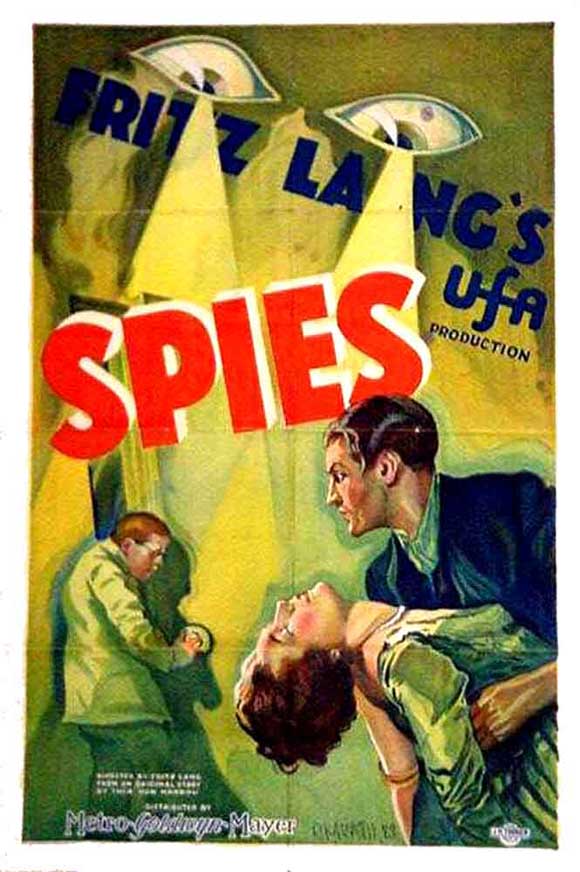
Fritz Lang’s Spies (1928) was one of the earliest spy films

Hitchcock’s 2nd thriller was Blackmail (1929), his and Britain’s first sound film.


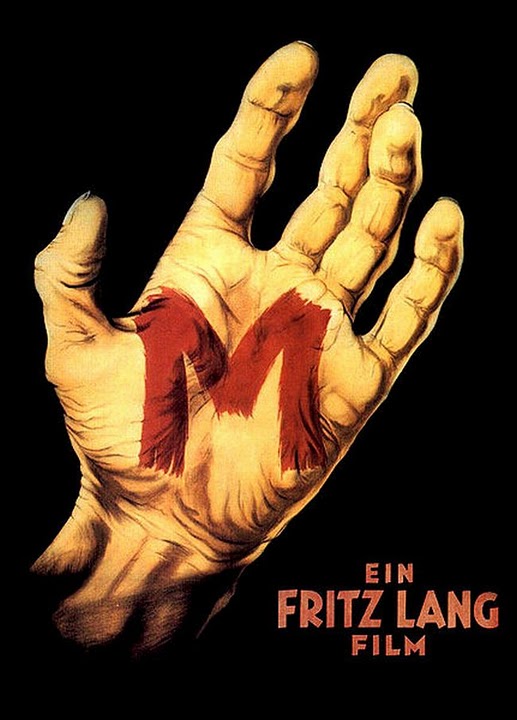
German film M (1931) based on life of serial killer Peter Kurten


The Man Who Knew Too Much (1933) Hitchcock

In the 1950s, Hitchcock added Technicolor to his films,

The Manchurian Candidate (1959) is a classic cold war paranoia

Michael Powell’s Peeping Tom (1960)

Alfred Hitchcock’s Psycho (1960)


The Spy Who Came In From The Cold (1963)

The 1970s began a violent side to thrillers, with Hitchcock’s Frenzy (1072) receiving an R rating due to its explicitly graphic scenes, including strangulation.


The Bourne Identity (1980) is one of the first to be written in the modern style that we know today


Novelists closely associated with Thriller Genre include Eric Ambler, John Grisham, Ted Bell, Dan Brown, Lincoln Child, Tom Clancy, Clive Cussler, Michael Crichton, Nelson DeMille, Richard Ferguson, Ian Fleming, Ken Follett, Frederick Forsyth, Graham Greene, Robert Ludlum, Alistair MacLean, Andy McNab,David Morrell, James Phelan, Douglas Preston, and Matthew Reilly.


Monday, 21 October 2013

Film Inspiration

The Collector (1965) - A man kidnaps a woman and holds her hostage just for the pleasure of having her there.


Kiss The Girls (1997) - Police hunting for a serial killer are helped when a victim manages to escape for the first time


Shuttle (2008) - A late night airport shuttle ride home descends into darkness


P2 (2007) - A businesswoman is pursued by a psychopath after being locked in a parking garage on Christmas Eve.


The Betrayed (2008) - The story follows a young woman as she's put through a psychological journey under the thumb of a mysterious figure who suspects her husband of stealing millions from a crime syndicate.


An American Crime (2007) - The true story of suburban housewife Gertrude Baniszewski, who kept a teenage girl locked in the basement of her Indiana home during the 1960s.


Donkey Punch (2008) - Things go drastically wrong for a group of British holidaymakers in Spain.

Friday, 18 October 2013

Iconic Thriller Film Directors


What Makes Each Director Different?
Alfred Hitchcock:

Hitchcock is known for a distinctive and recognisable directorial style. He pioneered the use of a camera made to move in a way that mimics a person's gaze, forcing viewers to engage in a form of voyeurism.

 He framed shots to maximise anxiety, fear, or empathy, and used innovative film editing. His stories often feature fugitives on the run from the law alongside "icy blonde" female characters. Many of Hitchcock's films have twist endings and thrilling plots featuring depictions of violence, murder, and crime.

Many of the mysteries, however, are used as decoys or "MacGuffins" that serve the film's themes and the psychological examinations of the characters. Hitchcock's films also borrow many themes from psychoanalysis and feature strong sexual overtones.
Steven Spielberg:
His is films began addressing humanistic issues such as the Holocaust, the Transatlantic slave trade, war, and terrorism. Spielberg's films often deal with several recurring themes. Most of his films deal with ordinary characters searching for or coming in contact with extraordinary beings or finding themselves in extraordinary circumstances. In an AFI interview in August 2000 Spielberg commented on his interest in the possibility of extra terrestrial life and how it has influenced some of his films.
A strong consistent theme in his family-friendly work is a childlike, even naïve, sense of wonder and faith, as attested by works such as Close Encounters of the Third Kind, E.T. the Extra-Terrestrial, Hook, and A.I. Artificial Intelligence. According to Warren Buckland, these themes are portrayed through the use of low height camera tracking shots, which have become one of Spielberg's directing trademarks.


The most persistent theme throughout his films is tension in parent-child relationships. Parents (often fathers) are reluctant, absent or ignorant. Peter Banning in Hook starts off in the beginning of the film as a reluctant married-to-his-work parent who through the course of his film regains the respect of his children.
 James Cameron:


Recurring themes include the conflicts between humanity and technology, the dangers of corporate greed, strong female characters, and a strong romance subplot. In almost all films, the main characters usually get into dramatic crisis situations with significant threats to their own life or even the threat of an impending apocalypse. While The Abyss dealt with deep sea exploration, Cameron himself became an expert in the field of deep-sea wreckage exploration, exploring the wreckage of the Titanic and the Bismarck.